


Puccinia otira (G. Cunn.) McKenzie & Padamsee 2024



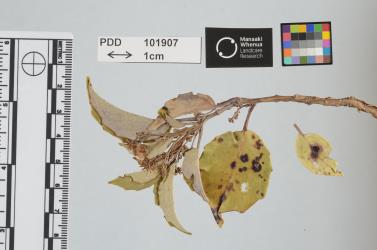
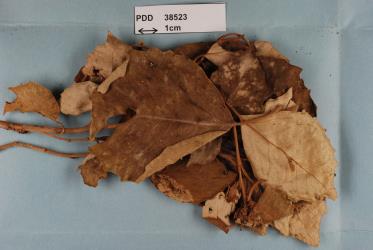
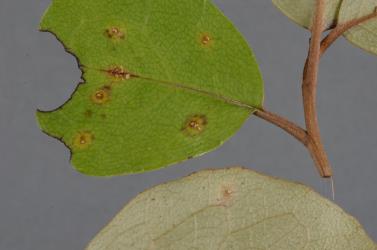
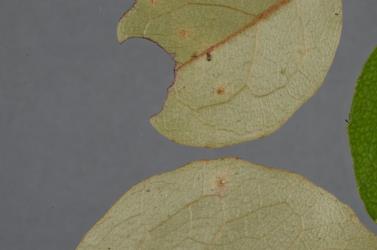
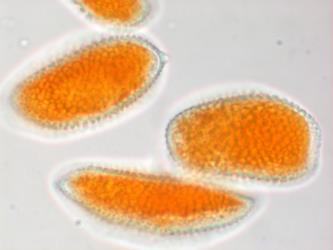
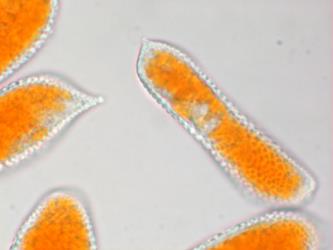
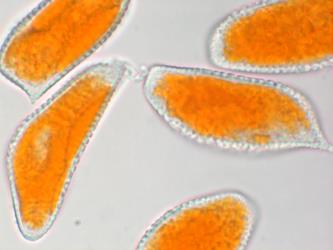
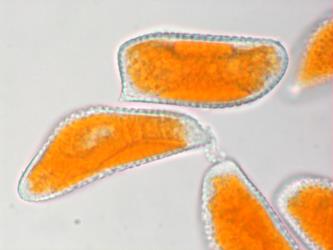
Show more
 Details

 Details
Puccinia otira (G. Cunn.) McKenzie & Padamsee in McKenzie et al., New Zealand J. Bot. [electronic] [34] (2024)
Puccinia otira (G. Cunn.) McKenzie & Padamsee 2024
Nomenclature
McKenzie & Padamsee
G. Cunn.
(G. Cunn.) McKenzie & Padamsee
2024
[34]
ICN
species
Puccinia otira
Classification
Synonyms
Associations
 View full associations record
has host

Descriptions
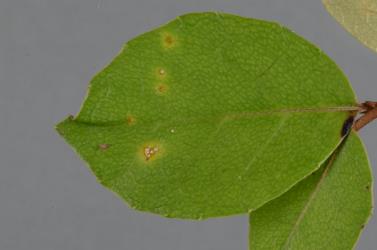
Host: Olearia arborescens (Forst. f.) Ckn. et Laing. Mt. Egmont, Taranaki, 1,000 m., 2/23. E. H. Atkinson!; 1,300 m., 4/25, J. C. Neill!; 11/27, 1,000 m., G.H.C. Arthur's Pass, Canterbury, 900 m., 1/28. G.H.C. Alecs' Knob, Franz Josef Glacier, Westland, 1,300 m., 1/28 G.H.C.
0. Pycnia chiefly epiphyllous; flask-shaped, sparse, scattered, immersed, associated with the aecidia.
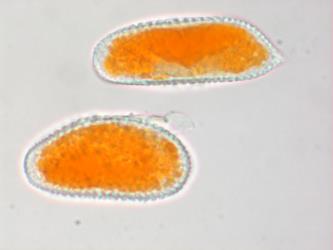
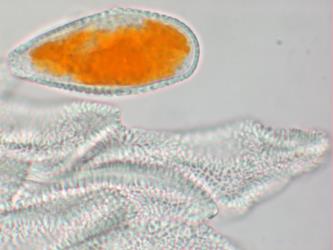
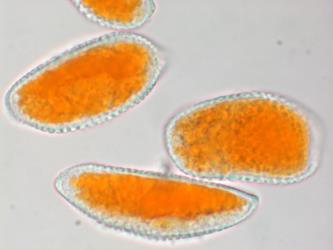
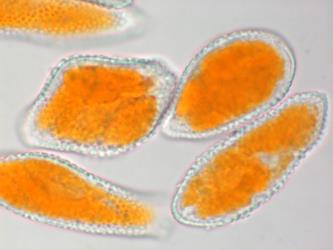
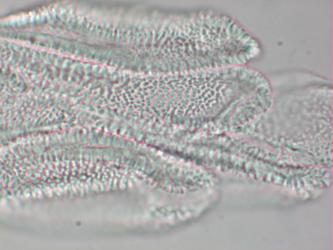
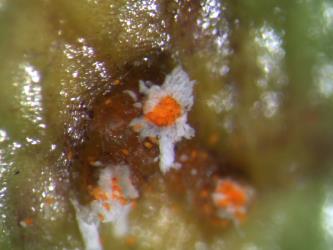
I. Aecidia amphigenous and on petioles and stems, in scattered groups of 3-5, seated on discoloured spots visible on both surfaces, pallid orange, becoming lemon yellow; peridia 0.4-0.5 mm. diam., up to 2 mm. above the leaf surface, at first cylindrical, and scarcely revolute, eroded, becoming lacerate with age; cells polyhedral, to 70 mmm. long, hyaline, thick walled, sculptured. Spores elliptical, or obovate, 38-52 x 22-28 mmm. ; epispore hyaline, 1.5 mmm. thick, densely covered with angular deciduous warts, appearing reticulate.
The host is endemic and common throughout (Cheesem. 1925, p. 919). The aecidium shows a general resemblance to that of Puccimia novae-zelandiae G. H. Cunn. (and was included under this species in a previous paper) in its cylindrical shape, but differs in the hyaline, not tinted epispore, and in this structure being reticulate and not verruculose.
Both host and rust are endemic. This rust is limited in its distribution to subalpine areas in both North and South Islands. Cunningham (1931 a) separated it from aecidial stages of other rusts recorded on Olearia by its hyaline reticulate spores.
Type: Rust and Smut Fungi; Description: Aecia in scattered groups, erumpent, orange to yellow, with a torn margin, up to 0.5 mm in diameter; on both surfaces of leaves, and on petioles and stems, discoloured leaf spots visible on both sides of the leaf. Aeciospores elliptical to obovate, 38–52 × 22–30 μm, covered with angular warts, appearing reticulate.
Distribution: Taupo, Taranaki, Wellington, Buller, Westland, Mackenzie, Stewart Island.; 1st Record: Cunningham (1924b: as Puccinia novae-zelandiae).
Significance: The rust causes little damage.; Host(s): Olearia arborescens.
Taxonomic concepts
Aecidium otira G. Cunn. (1928)
Aecidium otira G. Cunn. (1928)
Collections
Metadata
f5178f6c-d653-491a-870b-2d03b63c4f7d
scientific name
Names_Fungi
30 October 2019
22 November 2026
