


Pantoea bangladeshensis Goswami et al. ? [2026]


Show more
 Details

 Details
Pantoea bangladeshensis Goswami et al., Scientific Reports (? [2026])
Pantoea bangladeshensis Goswami et al. ? [2026]
Nomenclature
Goswami et al.
Goswami et al.
?
2026
invalidly published
ICNP
Pantoea bangladeshensis Goswami et al. ? [2026]
species
Pantoea bangladeshensis
Classification
Associations
 View full associations record

Descriptions
Pantoea bangladeshensis Goswami et al. ? [2026]
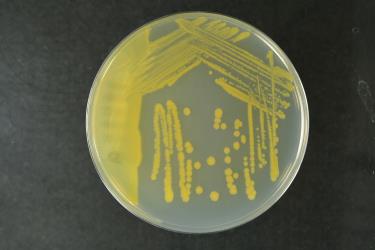
Cells are Gram-negative, motile, and rod-shaped. On King’s medium B base agar, the bacterium forms smooth, round, convex colonies with entire margins and exhibits a distinctive yellow pigmentation. Growth occurs optimally at 30–35 °C under facultatively anaerobic conditions. Biochemical profiling reveals positive reactions for catalase, nitrate reduction, and the Voges-Proskauer test (acetoin production), while testing negative for oxidase, indole production, methyl red, urease, and hydrogen sulfide (H2S) production. The strain utilizes citrate as a carbon source. Acid production is observed during the robust fermentation of multiple carbohydrates, including glucose, sucrose, lactose, D-cellobiose, D-maltose, D-mannitol, palatinose, and D-trehalose, but not D-mannose or D-sorbitol. The genome of the type strain comprises 4,354,973 bp with an average G + C content of 56.13 mol%, assembled into three contigs. Genome quality assessment reveals high completeness (97.44%) and negligible contamination (0.02%). Genomic annotation identified 3,845 protein-coding sequences (CDS), 78 tRNAs, and 22 rRNAs. Notably, genomic analysis revealed the complete presence of Type I (T1SS) and Type V (T5aSS, T5bSS) secretion systems, while characteristically lacking Type III (T3SS) and Type VI (T6SS) secretion machineries. These distinct genomic features are strongly associated with its potential host interaction and extracellular enzyme secretion mechanisms.
The type strain is NSTU24ᵀ (= LMG 34932ᵀ = ICMP 26447ᵀ), isolated from discoloured rice grains (Oryza sativa L.) in the Rajshahi district of Bangladesh. The second independently isolated strain, NSTU24.1, has been designated as a reference strain for this species
Taxonomic concepts
Pantoea bangladeshensis Goswami et al. ? [2026]
Pantoea bangladeshensis Goswami et al.
Pantoea bangladeshensis Goswami et al. ? [2026]
Collections
Notes
Etymology
Pantoea bangladeshensis (bang.la.desh.en′sis. N.L. adj. bangladeshensis (derived from Bangladesh); referring to the geographic region of isolation of the species, namely Bangladesh, where the strain was isolated).
Metadata
d93ec9c7-3f8b-446f-82e5-6c1215f61bc8
scientific name
Names_Fungi
16 November 2026
20 November 2026
